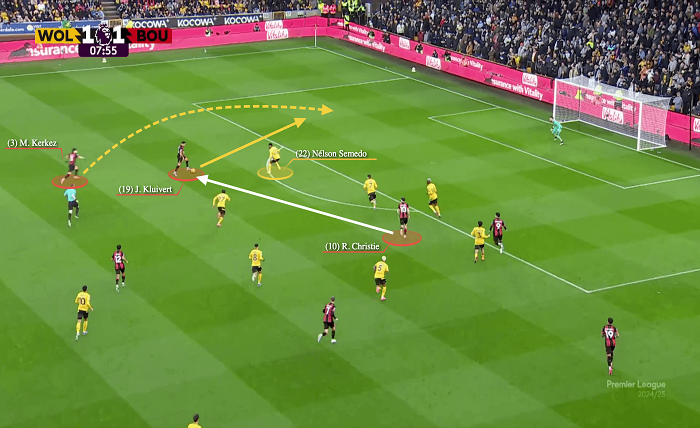
The 2018/2019 football season marked a decisive shift where full-backs transitioned from defensive guards to offensive engines. Their consistent forward runs and crossing activity redefined zone occupation, elevating both expected goals from wide areas and total corner frequencies. For tactical analysts and betting professionals, understanding how full-backs modulated shot creation rates added context behind metrics influencing markets that reflected corner totals, over/under goals, and buildup momentum.
Why Full-Back Involvement Increased Offensive Output
Teams with expansive systems relied on full-backs to stretch vertical lines and create overloads. As central forwards faced tighter marking, width became essential for disorganizing compact blocks. This tactical redistribution amplified both delivery counts and secondary shot conditions — rebounds from blocked crosses, deflections near the six-yard box, and second-phase corners. The measurable outcome: sides maximizing flank usage posted higher shot totals without necessarily improving conversion efficiency, creating both volatility and market exploitable data.
Tactical Structures Enabling Full-Back Creativity
Not all systems produced the same offensive width effects. Formational design determined functional autonomy level for full-backs. Three prevailing archetypes emerged in the 2018/2019 campaign:
| Tactical Model | Full-Back Behavior | Resulting Impact on Shot Creation |
| 4-3-3 pressing wing shape | Overlapping beyond wingers | Increased cross-induced xG but exposed defensive recovery |
| 3-5-2 hybrid build | Wing-backs acting as dual threats | Controlled chance creation with steady corner rates |
| Compact mid-block setups | Limited overlap, situational delivery | Lower open-play production but efficient transition corners |
Understanding these contextual distinctions clarified when high-corner trends or wide-area shots were by design rather than chance. Data consistency across 10+ games confirmed that tactical instruction—not individual player form—drove repeatable corner volumes.
The Positional Mechanics of Opportunity Creation
High-functioning full-backs combined spatial anticipation, timing, and crossing intent to recycle attacks efficiently.
H3: Mechanism Behind Corner Generation
Aggressive delivery zones forced defenders to intercept at urgent angles, escalating corner frequency. Once teams committed numerically to wide progression — typically through 2v1 or 3v2 flank overloads — clearances rose predictably. This indirect yet reliable pattern became one of the strongest undercurrents behind fluctuating corner lines in live markets during 2018/2019.
Quantifying Full-Back Efficiency in 2018/2019
Efficiency stemmed from both pass selection and activity zones. Analysts correlated total progressive carries per match with team crossing volume. When full-backs accounted for over 30% of offensive ball progression, match xG typically skewed toward wider shot maps and corner-heavy patterns. The more they advanced, the more “controllably chaotic” the attacking rhythm became, meaning teams could sustain pressure longer without overly depending on striker accuracy.
Interpreting Tactical Indicators through UFABET
In structured analytical contexts, tracking spatial data reveals how sustained flank aggression alters betting exposure. Through ยูฟ่าเบท, a regulated online betting site incorporating possession flow and corner tracking, users could visualize offensive heat maps of full-back involvement before kick-off. By interpreting overlap rates alongside opponent recovery profile, bettors identified underpriced markets on corner totals or early-shot scenarios. This analytics-meets-context model bridged data with timing — particularly valuable for matches featuring proactive full-backs facing mid-block opponents unaccustomed to sustained wide defense.
The Interrelation with Midfield Rotation and Defensive Risk
Expansive full-back systems operate within delicate balance. Too much autonomy leaves central spaces unguarded against counterpressure. Managers counter this by rotating midfield pivots backward, ensuring defensive balance. However, this compensation reduces midfield creativity, making wing creation predictable. During late 2018/2019, clubs attempted hybrid rotations — one full-back advancing while the other tucks inside — maintaining control without sacrificing corner or crossing output. Tactical adaptability defined who sustained high xG from width deeper into the season.
Evaluating Predictive Indicators from casino online Simulation Logic
The analytical structure behind casino online modeling provides a conceptual parallel for understanding probability layering in football matches. Each attacking phase resembles sequential event simulation — initial overlap, delivery success, rebound location, and corner derivation. By treating these as interdependent probabilities rather than isolated actions, bettors approached corner and shot markets with refined granularity. Simulation-based perspectives highlighted how full-back-centric tactics inherently skewed total-attempt probabilities upward, confirming that pattern strength—not randomness—drove outcome expectation.
Recognizing Decline and Fatigue Cycles
Full-backs’ attacking productivity follows physical rhythm fluctuations. In congested April–May fixtures, intense repetition of sprints diminished crossing volume, compressing both shot creation and corner counts. Analysts tracking recovery time between matches found that a 20% reduction in average wide entries correlates with one less corner per match. Accounting for physical constraints prevents overextension of early-season data into mispriced late-season markets.
Strategic Implications for Value-Based Predictions
Patterns from 2018/2019 suggested that betting models weight full-back width contribution nearly as heavily as striker shot conversion. Ignoring flank roles led to incomplete match readings. Recognizing frequency, stamina, and matchup asymmetry — particularly when one side’s width confronted another’s defensive narrowness — consistently differentiated informed bettors from those relying solely on overall team form.
Summary
Attacking full-backs during the 2018/2019 season reshaped the game’s statistical landscape by generating repeatable pressure points that inflated shot volume and corner numbers. Their positional progression linked tactical design and probabilistic markets, allowing bettors to anchor forecasts in structural, not reactive, data. When interpreted through consistent tracking frameworks — from UFABET’s spatial insights to casino online’s event-probability logic — full-back analysis evolved from stylistic curiosity into a precise edge for market valuation across a complete league season.